
What Is in E-Liquid? PG, VG, Flavoring and Nicotine Explained
E-liquid has four main components. Learn what each one does, what to look for on a label and what is meant by food-grade flavoring.
E-liquid is a short list of ingredients, but the details differ between brands, and many people are curious about what they are actually inhaling. This guide explains the main ingredients in plain language: propylene glycol, vegetable glycerin, flavoring and nicotine, plus the optional extras you may see, how to read a label, how ingredients affect the experience, what we can and cannot say about them, how to store liquid and what to do if you think an ingredient does not suit you. It is general information for adults aged 21 and over. Nicotine is addictive. We make no health claims about any ingredient, and nothing here is medical advice.
The basic recipe
Most e-liquids contain four things: a base made of propylene glycol and vegetable glycerin, flavoring, and nicotine in most cases. The proportions vary between products, and the base is usually the largest part by volume. The ratio of the two base liquids is printed on many labels, and it affects how the liquid wicks, how the vapor feels and which hardware it suits.
Propylene glycol (PG)
A thin, odorless liquid that carries flavor and gives throat feel. It is used widely in food and personal care products, which is one reason it is common in e-liquid. In e-liquid, it is thin and wicks quickly, so it suits small coils and pods. Higher-PG liquids tend to taste crisp and give more throat hit. We make no claims about how it affects your body. If you are sensitive to it, stop using the product and speak to a healthcare professional.
Vegetable glycerin (VG)
A thicker, slightly sweet liquid made from plant oils, which produces denser vapor. Because it is thick, it wicks slowly and needs coils with large wicking channels. Higher-VG liquids give a smoother feel and bigger clouds, and they suit sub-ohm tanks. See PG and VG ratios explained.
Flavoring
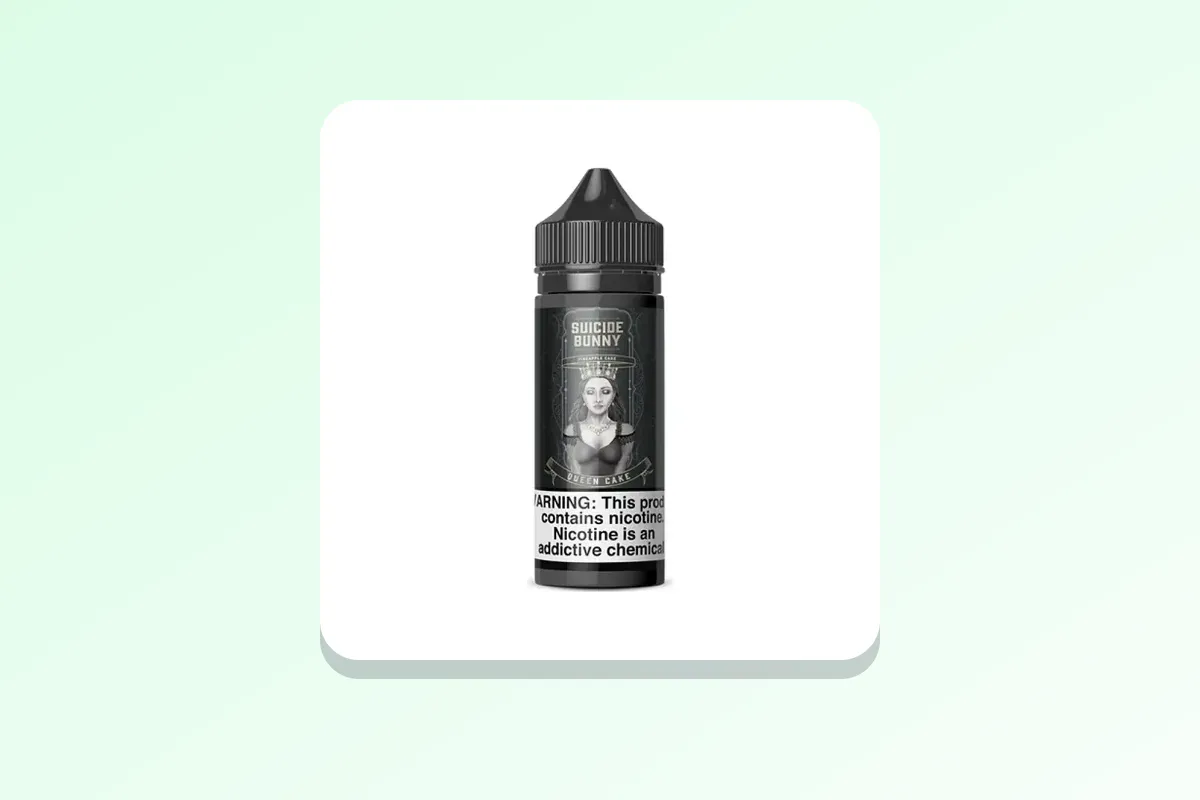
Flavor concentrates give each liquid its character: fruit, dessert, mint, tobacco and many others. Brands often describe them as food-grade, meaning they are commonly used in foods. Being edible is not the same as being suitable to inhale, and we make no health claims about flavorings. The formulas are the maker's own, and brands do not always list every component. If a flavor does not agree with you, try a different one or a different brand. See vape flavor profiles explained.
Sweeteners and cooling agents
Some liquids add sweeteners to round out a flavor, and cooling agents to produce a fresh, icy sensation without changing the taste. These are used in small amounts. Cooling agents are why "ice" versions of flavors feel different. See how cooling ice flavors work. Sweeteners can leave residue on coils, which shortens their life.
Nicotine
Present in most liquids, as freebase or nicotine salts, in a stated strength. Nicotine is addictive. Strength is shown in milligrams per milliliter or as a percentage. Freebase is the traditional form, used at lower strengths. Salts are smoother at higher strengths and common in pods and disposables. See the nicotine strength guide and nicotine salts vs freebase. Zero-nicotine liquids exist for adults who want flavor without nicotine.
Optional extras
Some liquids add water to thin them, or other components for specific effects. Not all are listed in detail, so check the brand's information. We list what the manufacturer provides on the product page. If you want to know more about a specific product, ask us, and we will tell you what we know.
Reading the label
Look for ratios, strength, volume and the warning statement. The label should also show the manufacturer's details and, in many cases, a batch or date code. Our guide to reading an e-liquid label walks through each element. A label that is missing key information, or that has no nicotine warning, is a concern. See what the nicotine warning label means.
How ingredients affect the experience
- More PG: crisper flavor, more throat hit, thinner vapor.
- More VG: smoother feel, denser vapor, slower wicking.
- Higher nicotine: stronger sensation, and a need to match the device.
- Flavor and sweeteners: taste, and how quickly a coil wears.
- Cooling agents: a fresh sensation.
What we can and cannot say
We can tell you what a product is, what the manufacturer lists and how it is used. We cannot tell you that any ingredient is good or bad for your body, because we make no health claims, and regulators restrict them. If you have a health question, speak to a licensed healthcare professional. See the FDA and vaping products.
Storage
Keep liquid cool, dark and away from children and pets; see how to store e-liquid and keeping vapes away from children and pets. Heat and light degrade flavor and darken the liquid. Keep caps tight. Check the date, and use older bottles first. See also e-liquid shelf life and expiry.
Allergies and sensitivities
If you suspect a reaction to an ingredient, stop using the product and talk to a healthcare professional. Some people notice irritation, a dry mouth or a cough with certain bases or flavors. It is a good idea to change one thing at a time, such as the flavor or the ratio, so that you can tell what causes it.
Frequently asked questions in depth
Are all e-liquids made the same way?
The basic approach is similar, but recipes, ratios and quality differ. Reading the label and buying from a reputable seller helps.
Why do some liquids list more than the four ingredients?
Because flavor systems can be complex, and some products add extras. The label shows what the maker lists.
What does "food-grade" mean?
It refers to ingredients commonly used in food. It does not mean the product is suitable for inhalation or free of risk, and we make no such claim.
Why is my liquid darker than before?
Nicotine liquid darkens over time with air and light. A little color change is usual. See what is steeping.
Can I mix liquids?
It changes ratio, strength and flavor in ways that are hard to predict. It is simpler to buy the product you want.
Shop
Browse vape juice. All products are for adults aged 21 and over, and nicotine is addictive.
How to compare two liquids using the label
Imagine two bottles of 30 milliliters. Bottle A lists 50/50 PG/VG, 35 mg/mL nicotine salt and a fruit flavor. Bottle B lists 70/30 VG/PG, 3 mg/mL freebase nicotine and a dessert flavor. From the label alone you can tell that A suits a low-power pod with a high-strength salt, while B suits a sub-ohm tank with a low-strength freebase. The ratios and strengths point to different hardware. If you used A in a sub-ohm tank, the vapor would be harsh, and if you used B in a small pod, it would be too thick to wick. Reading the label tells you where each belongs.
Why ingredient lists are short
Labels list the main components and the nicotine, but flavor formulas are often proprietary, and makers do not always list every component. The rules on labeling differ by place. If you want more detail, ask the brand or the seller, and be aware that you may get a general answer. We share what the manufacturer provides on the product page.
Questions to ask before you buy a new liquid
- What is the PG/VG ratio, and does it suit my device?
- What is the nicotine type and strength?
- What is the bottle size, and will I use it before it ages?
- Does the label show the nicotine warning and the maker's details?
- Is the seller clear about where the product comes from?
If the answers are all clear, you can buy with confidence. If any is missing, ask first.
When ingredients change
Brands sometimes change recipes, and a liquid you like may taste different after a change. If that happens, tell the seller, because it may be a new batch. Keep the bottle's batch code. If you are very particular about a flavor, buy what you need within a reasonable window, not a huge stock, because liquids age.
Frequently asked questions about ingredients
Why do some liquids contain water? A small amount of water thins the liquid slightly, which can help wicking in some recipes.
Does a clear liquid differ from a colored one? Some liquids are clear and some are tinted, depending on the flavoring and age. Color is not a reliable guide to quality.
Can I check ingredients myself? You can read the label and the maker's information. Detailed testing is a matter for manufacturers and regulators, not something we can do for you.
What if I want a liquid without a certain ingredient? Tell us what you want to avoid, and we will tell you what the maker lists. If the information is not available, we will say so.
Choosing liquids with ingredients in mind
If you know that you prefer a crisper feel, look for balanced or PG-leaning ratios. If you want smoother vapor and bigger clouds, look for higher VG, with hardware that suits it. If you want to avoid nicotine, choose a zero-strength liquid. If you are new to a brand, start with one bottle, judge it over several days and then decide whether to buy more. Taking a measured approach lets you learn what suits you without wasting liquid.
Frequently asked questions
What is in e-liquid?
A base of propylene glycol and vegetable glycerin, flavoring and, in most liquids, nicotine, plus optional extras such as sweeteners or cooling agents.
What does PG do?
It is thin, carries flavor and gives throat feel. It wicks quickly, so it suits small coils and pods.
What does VG do?
It is thicker and slightly sweet, producing denser vapor. It suits sub-ohm tanks with large coils.
Do you make health claims about ingredients?
No. We describe what manufacturers list and how products are used. We make no health claims.
Where do I find the ingredients and strength?
On the label and product page. Look for ratios, strength, volume and the nicotine warning.
What if I think I react to an ingredient?
Stop using the product and talk to a healthcare professional.
Vaping products contain nicotine. Nicotine is an addictive chemical. You must be 21+ to purchase. Not for use by pregnant women or people with health conditions. This article is general information for adults, not medical or legal advice. Product laws differ by state and city — check the rules where you live before you buy.
Shop related products
Keep reading
PG and VG Ratios Explained: How They Change Your Vape
E-liquid is mostly propylene glycol and vegetable glycerin. Learn how the ratio affects throat feel, vapor and which device it suits.
E-Liquid Shelf Life: How Long Does It Last?
Unopened e-liquid usually lasts a year or two when stored well. See what shortens shelf life and how to tell when liquid has gone off.
What Is Steeping, and Does It Matter for E-Liquid?
Steeping lets flavors blend over days or weeks. Learn when it helps, when it does not and how to do it properly.