

PG and VG Ratios Explained: How They Change Your Vape
E-liquid is mostly propylene glycol and vegetable glycerin. Learn how the ratio affects throat feel, vapor and which device it suits.
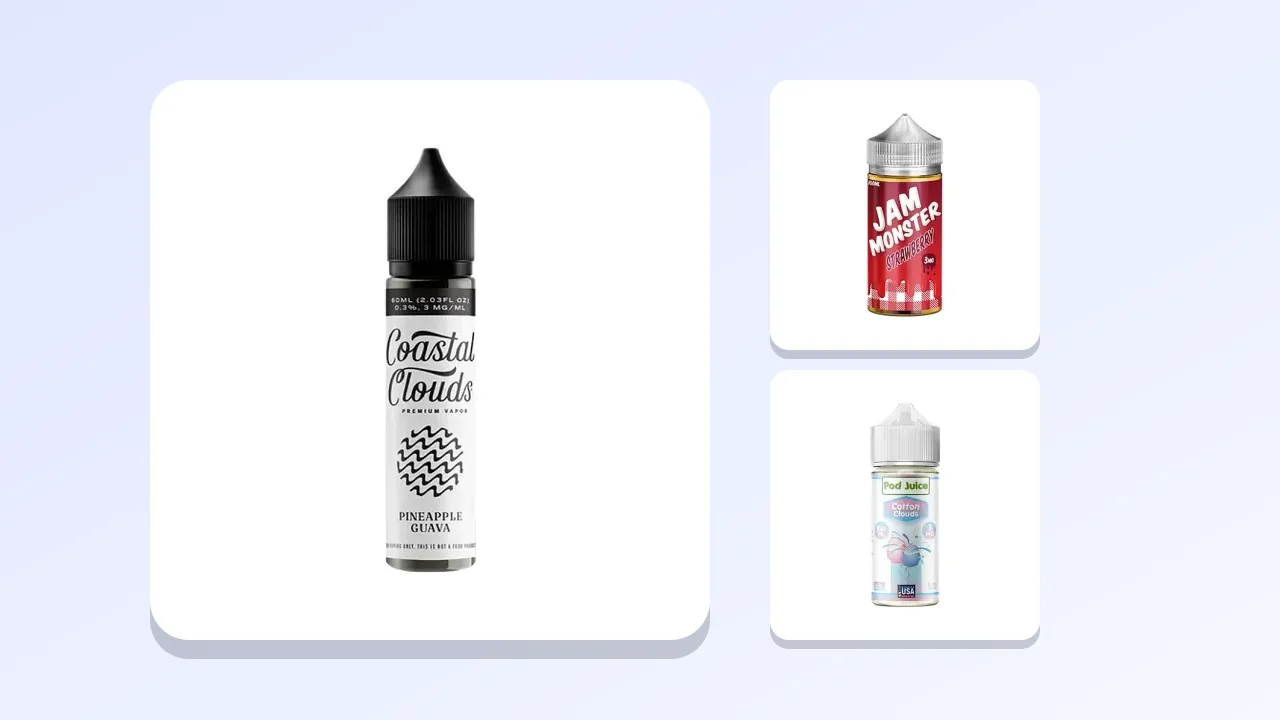
Almost every e-liquid on the market is built on two ingredients: propylene glycol, written PG, and vegetable glycerin, written VG. The ratio between them is printed on most bottles, often as numbers such as 50/50 or 70/30, and it shapes how your vape feels, how it tastes and, most importantly, whether it works in your device at all. This guide explains what each ingredient does, what the common ratios mean, how to match a ratio to hardware and how to troubleshoot the problems a mismatch causes. It is general information for adults aged 21 and over, and nicotine is addictive.
The two base liquids
PG and VG are both clear, odorless liquids used widely in food, cosmetics and many other products. In e-liquid they act as carriers: they hold flavor and nicotine, and they turn into vapor when heated by the coil. Each has distinct properties, and e-liquid makers blend them to suit different devices.
What PG does
Propylene glycol is thin and runny. It carries flavor very well, which is why high-PG liquids often taste crisp and distinct. It also produces more of the throat hit that some users associate with a classic vape. Because it is thin, it wicks quickly through small coils, which suits pods and starter kits with small, high-resistance coils. The downside is that it creates thinner, less dense vapor.
What VG does
Vegetable glycerin is thicker and slightly sweet. It produces denser, softer vapor and a smoother feel. Because it is thick, it wicks slowly and needs coils with big wicking channels and generous airflow, such as sub-ohm tanks. It is the ingredient that produces large clouds. The downside is that very thick liquid can starve a small coil and cause a burnt taste.
Reading ratios on a bottle
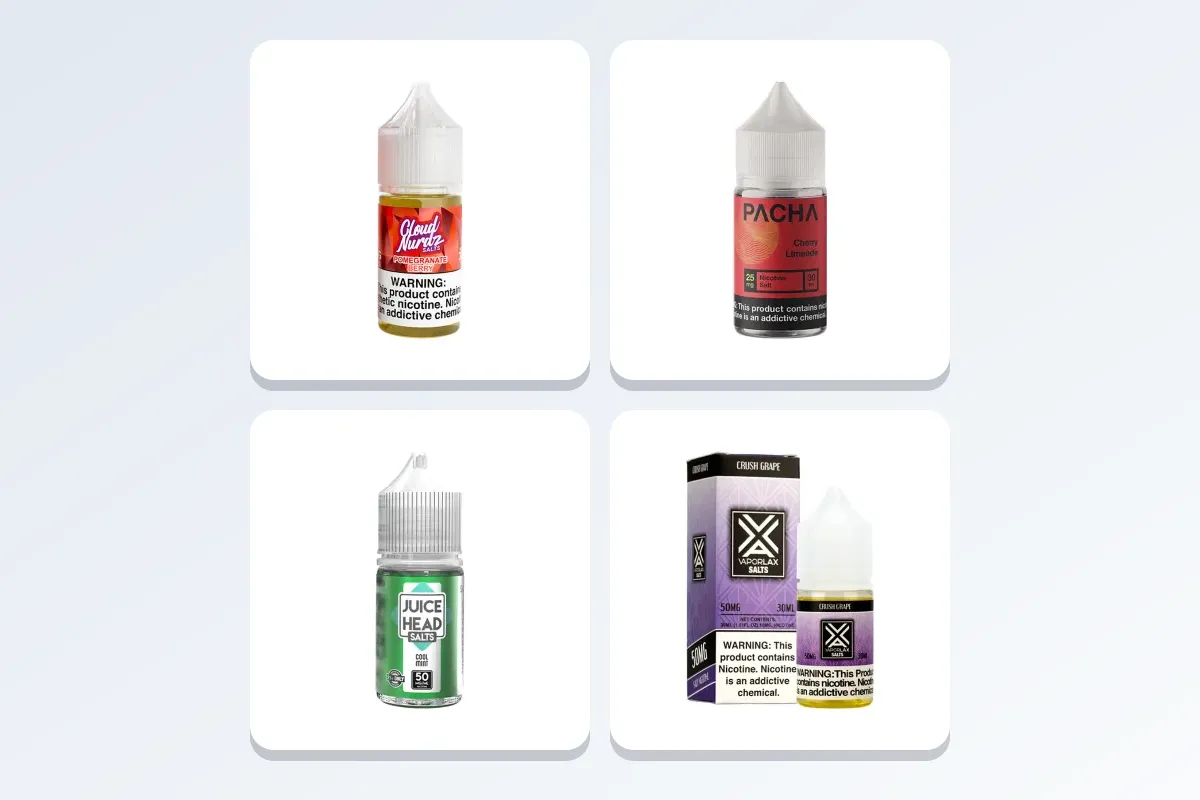
The ratio is written PG first and VG second, though some brands put VG first, so read the label carefully. A bottle marked 50/50 contains equal parts. A bottle marked 70/30 might mean 70% PG and 30% VG or the reverse depending on the brand, and brands that print "70VG/30PG" remove the doubt. Many labels also list "max VG", which means as much VG as the flavor and nicotine allow, typically around 70 to 80% VG after the other ingredients are added.
Common ratios and what they suit
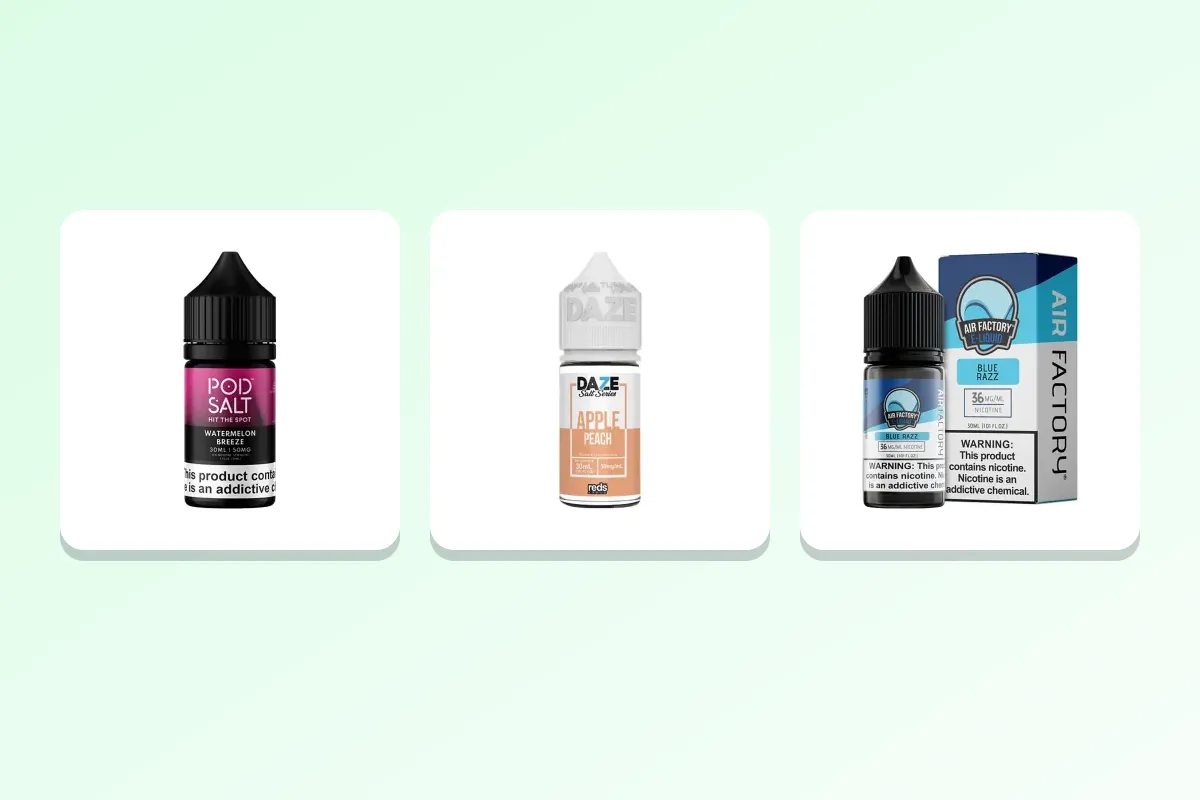
- 50/50: a balanced blend that works in most pods, pen devices and mouth-to-lung tanks. It is the default for many flavored liquids because it carries flavor well and wicks reliably.
- 60/40 or 70/30 PG-heavy: very thin. Best for small pod systems and the tiniest coils, and can feel crisp on the throat.
- 70/30 VG-heavy: thicker, intended for sub-ohm tanks and higher-power devices with larger wicking holes.
- Max VG: the thickest option, only suitable for hardware designed for it, and it produces the largest, smoothest clouds.
Nicotine-salt liquids for pods and disposables are commonly balanced or PG-leaning so that they wick through small coils, which is part of why the two nicotine types suit different devices. See nicotine salts vs freebase.
How the ratio changes the experience
Flavor
PG carries flavor strongly, so a 50/50 or PG-heavy liquid often tastes sharper. VG dilutes flavor slightly but adds sweetness and smoothness. If you find a high-VG liquid flavorless in a pod, it may simply be too thick to wick properly rather than lacking flavor.
Throat feel
More PG usually means more throat hit; more VG means a softer feel. If a liquid seems harsh, a higher-VG blend at the same strength can feel gentler, as long as your hardware can handle it.
Vapor volume
VG produces more visible vapor. Large clouds need both a high-VG liquid and a device that can vaporize a lot of it. In a small pod, a high-VG liquid will not make large clouds, and it may not work at all.
Coil life
Thick, sweet liquids can leave residue on coils faster, which shortens coil life in some devices. Thinner liquids tend to keep small coils cleaner. If you notice flavor fading earlier than expected, see how often to replace coils.
Matching the ratio to hardware
This is the rule that prevents most problems: use the ratio the hardware is designed for.
- Small pods and starter kits: 50/50 or PG-leaning, and usually nicotine salts.
- Mouth-to-lung tanks: 50/50 or 60/40.
- Sub-ohm tanks: 70/30 VG or higher, usually low-strength freebase.
- Disposables: the liquid is pre-filled with a ratio chosen by the maker, so there is nothing to match.
If you are unsure what your device is designed for, check the manual or product page. Our guide to sub-ohm vs mouth-to-lung explains the two main styles.
What a mismatch looks like
- Thick liquid in a small pod: the coil cannot soak up liquid fast enough, so it dries out and burns. You get a harsh, burnt taste and weak vapor. See why a vape tastes burnt and dry hits explained.
- Thin liquid in a powerful tank: the coil is flooded and the tank leaks or gurgles. See vape leaking causes and fixes and fixing a gurgling vape.
- Weak flavor: often a ratio and power mismatch rather than a problem with the liquid itself.
Allergies and sensitivities
Some people notice irritation or a dry mouth and throat with one base or the other. If you experience irritation, stop using the product and talk to a healthcare professional. Nothing in this guide is medical advice. Nicotine is addictive, and products are for adults aged 21 and over.
Flavorings and other ingredients
E-liquid also contains flavorings and, in nicotine products, nicotine. The ratio refers only to PG and VG, and the overall liquid may include other components in small amounts. Our guide to e-liquid ingredients explained covers the full list, and our guide on steeping explains why some liquids taste better after resting.
How to choose a ratio, step by step
- Find out what your device is designed for, from the manual or product page.
- Choose the matching ratio range: PG-leaning or 50/50 for pods, higher VG for sub-ohm tanks.
- Match the nicotine type to the same device class.
- Choose a bottle size that suits your use. See e-liquid bottle sizes.
- Try one bottle first. If wicking, flavor or throat feel is off, adjust the ratio before changing everything else.
Shopping for the right ratio
Our vape juice range lists the ratio and strength on product pages where the manufacturer provides them, and our vape kits pages describe what each device is built for. Choose your options above the Add to Cart button, and check out with Cash App, Apple Pay, Chime, cryptocurrency or gift cards. Crypto and supported gift cards save 10%, orders of $200 or more after discounts ship free, and an adult 21 or older must sign on delivery. If you are unsure, message us through the contact page and we will help you match a liquid to your hardware.
A quick cheat sheet
Keep this short summary in mind when you shop. If your device is a small pod, a disposable refill system or a pen-style kit, look for 50/50 or PG-leaning liquids, usually nicotine salts, in 30 mL bottles. If your device is a mouth-to-lung tank, look for 50/50 or 60/40 liquids. If your device is a sub-ohm tank or box mod with large airflow, look for 70/30 VG or higher in freebase strengths from 0 to 6 mg/mL and bottle sizes of 60 to 100 mL. When a label does not state the ratio, ask us before you buy, because the ratio is the single detail that most often explains a leak, a gurgle or a burnt taste.
Frequently asked questions in depth
Is a higher VG liquid always better for big clouds?
Only in the right hardware. VG creates dense vapor, but the device needs large coils, wide wicking channels and enough power to vaporize a thick liquid. In a small pod, high VG fails to wick and tastes burnt. Cloud size is as much about the hardware as the liquid.
Why do some labels say "70/30" without saying which is which?
Brands differ. Some write PG first, others VG first, and many now write "70VG/30PG" to be clear. If a label is ambiguous, check the brand's product page or contact us, because assuming the wrong way around is exactly how thick liquid ends up in a small pod.
Does the ratio affect nicotine strength?
The strength is a concentration in the finished liquid, so the ratio does not change the labelled strength. It does change how the liquid feels and how much vapor you make, which affects how satisfying a given strength seems.
Can I add flavor shots or nicotine to change the ratio?
Adding anything to a finished liquid shifts the ratio and strength. Makers formulate carefully, and altering a bottle is rarely worth the trouble. If you want a different strength or ratio, buy that version instead.
What ratio should I use for a disposable refill or pod?
Disposables are sealed, so there is nothing to refill. For refillable pods, follow the maker's recommendation, which is usually 50/50 or PG-leaning, and use nicotine salts if the pod is a low-power design.
Why is my liquid thick in winter and runny in summer?
All liquids thin as they warm and thicken as they cool. A high-VG liquid kept in a cold room can become sluggish, so let it come to room temperature before filling. Do not heat it with a flame or a microwave.
Frequently asked questions
What does 50/50 mean on an e-liquid bottle?
It means the liquid is made of roughly equal parts propylene glycol (PG) and vegetable glycerin (VG). It is a balanced blend that works in most pods and mouth-to-lung devices.
Which ratio makes bigger clouds?
Higher-VG liquids such as 70/30 VG or max VG produce denser vapor, but only in hardware designed for them, like sub-ohm tanks.
Why does my pod taste burnt with a thick liquid?
A high-VG liquid is too thick for a small coil to wick, so the coil dries out and burns. Use a 50/50 or PG-leaning liquid in small pods.
Does PG or VG give more throat hit?
PG gives more throat hit and carries flavor more strongly. VG feels softer and smoother.
Can I mix different ratios?
You can, but it changes the thickness and strength in ways that are hard to predict. It is easier to buy the ratio your hardware is designed for.
Do disposables have a PG/VG ratio I need to match?
No. The liquid in a disposable is pre-filled with a ratio chosen by the maker, so there is nothing to match.
Vaping products contain nicotine. Nicotine is an addictive chemical. You must be 21+ to purchase. Not for use by pregnant women or people with health conditions. This article is general information for adults, not medical or legal advice. Product laws differ by state and city — check the rules where you live before you buy.
Shop related products
Keep reading
What Is in E-Liquid? PG, VG, Flavoring and Nicotine Explained
E-liquid has four main components. Learn what each one does, what to look for on a label and what is meant by food-grade flavoring.
How to Read an E-Liquid Label (Strength, Ratio, Warnings)
Every e-liquid bottle carries the same key facts. Here is how to read bottle size, nicotine strength, PG/VG ratio and the required warning.
Adjustable Airflow Explained: Tighter or Looser Draw
Airflow controls how easily air passes through your device. Learn how to adjust it for flavor, vapor and a comfortable draw.